How to Prepare Your Restaurant for Sale in Atlanta
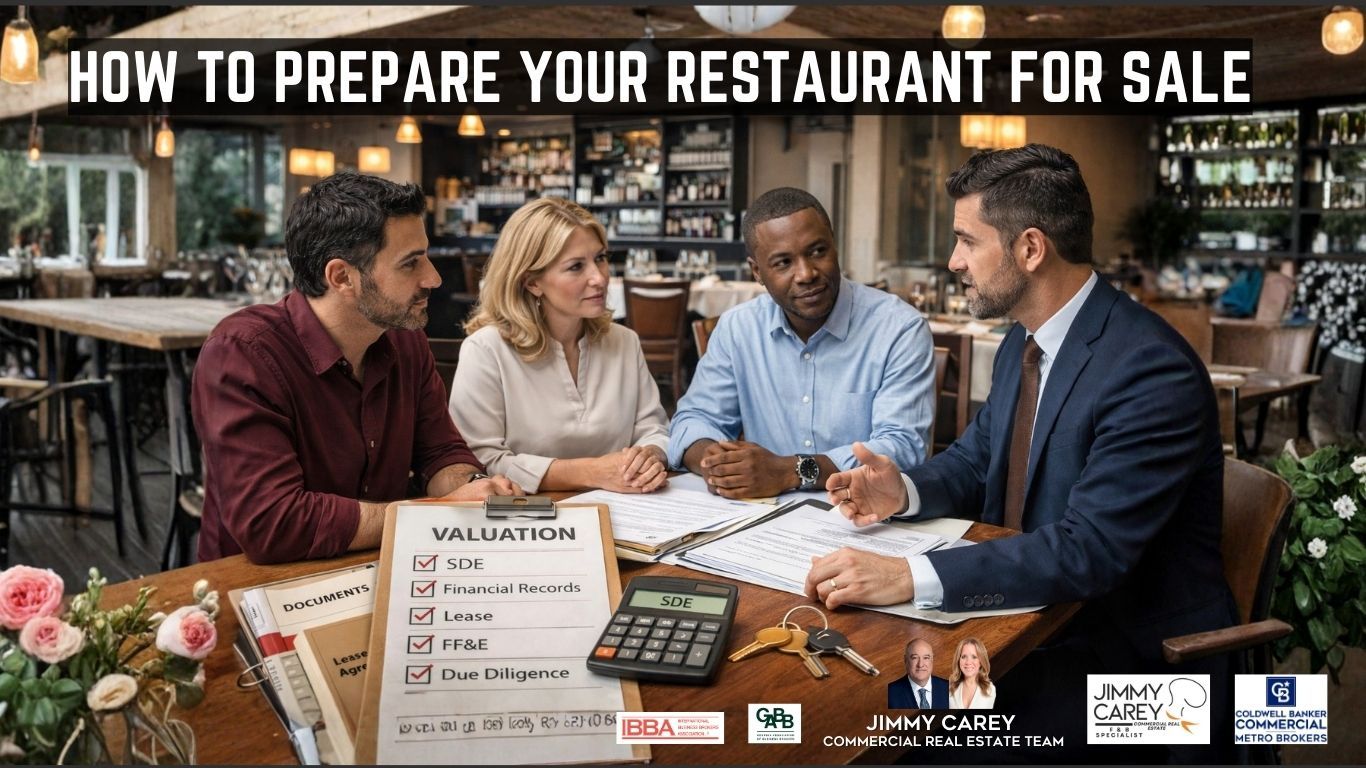
A Strategic Readiness Guide for Restaurant Owners
In today’s competitive Atlanta market, knowing how to Prepare Your Restaurant for Sale in Atlanta is often the difference between a clean, premium transaction and a deal that stalls during due diligence. Many restaurant owners focus on price, timing, and finding a buyer, but experienced buyers and qualified lenders evaluate something else first: readiness.
Readiness means your financial story is credible, your operations can transfer, your lease supports a buyer, your equipment condition matches the narrative, and your documentation reduces uncertainty rather than creating it. The more prepared the business is, the more confident buyers become — and buyer confidence leads to stronger offers, fewer retrades, and smoother closings.
As a restaurant broker who has spent decades in the industry — including owning and operating restaurants — I’ve seen firsthand where deals breakdown and where value quietly erodes. This guide is designed to help Atlanta restaurant owners prepare strategically, not reactively.
If you’ve already reviewed my article on restaurant valuation in Atlanta, you understand the core principle: earnings drive value. This readiness guide is the practical next step — what to do before you list so your valuation holds up when real buyers start asking real questions.
Why You Should Prepare Your Restaurant for Sale in Atlanta Before Going to Market
Most sellers don’t lose value because their restaurant isn’t good. They lose value because they list too early — before the business is packaged, documented, and positioned like a serious acquisition opportunity.
Buyers are making a risk decision. When they sense uncertainty — messy books, unclear staff structure, incomplete documentation, lease ambiguity, or equipment surprises — they respond predictably: they discount price, extend diligence, demand concessions, or walk away entirely.
Preparing your restaurant for sale in advance reduces those risks, improves the buyer experience, and allows you to control the narrative rather than defend it later.
This is also why sellers benefit from working with a specialist instead of a generalist. A restaurant and business brokerage platform built specifically for hospitality transactions is not just about marketing — it’s about preparation, valuation strategy, deal structure, and risk management.
Financial Readiness When You Prepare Your Restaurant for Sale in Atlanta
If there is one category that consistently makes or breaks a restaurant sale, it is financial readiness.
Ideally, sellers should organize four to five years of tax returns and profit-and-loss statements before going to market. Even if a buyer ultimately focuses on the most recent two to three years, longer history builds credibility and allows you to answer trend-based questions quickly and confidently.
Minimum Financial Package Sellers Should Prepare
4–5 years of business tax returns
4–5 years of annual P&Ls
Monthly P&Ls for the most recent 12–24 months
Year-to-date P&L updated within the last 30–45 days
POS sales reports that support the revenue story
Payroll summaries showing totals and structure
Clear explanations for unusual or non-recurring expenses
If you’re unsure whether your financials are truly “sale-ready,” it helps to review how Seller’s Discretionary Earnings (SDE) are calculated for Atlanta restaurants, since buyer interpretation of earnings is the foundation of pricing.
Financial Recasting Strategy When You Prepare Your Restaurant for Sale in Atlanta
Most restaurant financials are not naturally presented in a way that helps buyers evaluate true earning power. That’s where recasting becomes critical.
The goal of recasting is not to inflate numbers, but to clarify what is operationally necessary versus what is discretionary, owner-specific, or non-recurring. When done properly, recasting allows buyers to understand normalized earnings — and gives sellers a defensible pricing position.
When financial readiness is combined with a professional valuation framework and properly calculated SDE, sellers dramatically reduce the risk of retrades late in the deal. Clean preparation upfront protects value on the back end.
Operational Systems That Help Prepare Your Restaurant for Sale in Atlanta
One of the most overlooked value drivers in restaurant sales is operational transferability. Buyers are not just buying your brand — they are buying your ability to produce consistent results without chaos.
Documentation should be treated as a real asset because it directly reduces buyer risk.
Operational Documentation Buyers Value
- Standard Operating Procedures (opening, closing, cash handling, food safety)
- Recipe books with yields, portion sizes, and plating standards
- Food execution and plating guides with photos
- Employee policy manuals and attendance standards
- Training manuals and onboarding checklists
- Product specification books (brands, substitutions, allergens)
- Vendor order guides and par-level systems
Strong documentation signals maturity, professionalism, and scalability — all traits buyers are willing to pay for.
This guide also builds on my earlier article about getting your restaurant ready for market, reinforcing the same goal: reducing buyer risk before listing.
Lease and Real Estate Readiness: Often the Deciding Factor
In restaurant sales, the lease can make a profitable business harder to sell — and a struggling business easier to sell.
Buyers focus heavily on:
- Remaining lease term
- Renewal options
- Base rent and CAM increases
- Assignment language and landlord approval requirements
- Personal guarantee expectations
- Transfer fees and use restrictions
Many sellers wait until a buyer is identified before reviewing lease risks. By then, it’s often too late. Early lease analysis allows sellers to anticipate friction points and structure deals intelligently.
FF&E and Facility Readiness: Align Condition With Value Narrative
Even when a restaurant is sold based on earnings, buyers still assess operational risk during the walkthrough.
Sellers should prepare:
- A current list of major equipment
- Basic maintenance records, if available
- Clarity on owned vs. leased vs. vendor-supplied equipment
- A plan to address critical repairs
It’s important to understand that fair market value (FMV) and condition matter far more to buyers than book depreciation. A clean, well-maintained kitchen supports your earnings story. A neglected one raises fears about hidden costs.
Key Employees and Retention Strategy: Managing Transition Risk
Employees are not assets that transfer with certainty, and no seller can guarantee retention. However, sellers can responsibly reduce risk by preparing thoughtfully.
Common strategies include:
- Documenting roles and responsibilities
- Strengthening manager accountability
- Building bench strength
- Tightening training and scheduling systems
Industry guidance on retaining key employees during a business sale consistently shows that stability increases buyer confidence — even without guarantees.
A Clean Buyer Package: What Serious Buyers Expect
A professionally prepared buyer package typically includes:
- High-level business summary
- Financial overview with earnings narrative
- Lease summary and key terms
- Equipment highlights
- raining and transition expectations
- Deal structure framework
This is where professional brokerage packaging matters. Clear, structured presentation reduces friction and accelerates momentum. Sellers who want to understand my background and transaction approach can review my team and brokerage overview for additional context.
A Simple 12-Month Timeline to Prepare Your Restaurant for Sale in Atlanta
12 Months Out
Organize 4–5 years of tax returns and P&Ls
Begin SOPs, recipes, and training documentation
Review lease constraints and landlord expectations
6–9 Months Out
Improve bookkeeping consistency
Address critical equipment or facility issues
Strengthen staffing structure
3–6 Months Out
Recast financials and normalize earnings
Prepare buyer package
Confirm licensing and compliance
1–3 Months Out
Finalize pricing and go-to-market strategy
Prepare for due diligence
Begin buyer screening
Frequently Asked Questions
1) How early should I prepare before selling? Ideally 6–12 months.
2) Do I really need 4–5 years of financials? Strongly recommended.
3) What if my restaurant isn’t profitable? Asset sale strategies may still apply.
4) What do buyers request first? Tax returns, P&Ls, lease, and equipment overview.
5) Are SOPs and recipe books important? Yes — they reduce risk and support stronger offers.
6) Can I guarantee employee retention? No, but you can reduce risk.
7) Should I fix everything before listing? No — focus on fear-inducing issues.
8) How do I determine value? Start with earnings, recasting, and valuation fundamentals.
Final Thoughts for Atlanta Restaurant Owners
If you’re serious about selling, your goal should be simple: reduce uncertainty. Buyers pay more for businesses that are stable, documented, transferable, and professionally presented. Learning how to Prepare Your Restaurant for Sale in Atlanta is not optional — it is a value-protection strategy.
Ready to Prepare Your Restaurant for Sale?
If you’re considering a sale in the next 3–12 months, a confidential readiness review can help identify what’s holding value back and what will strengthen buyer confidence. For a direct conversation about your restaurant, your lease, and your best sale path, you can connect with me directly.
Jimmy Carey Commercial Real Estate
Atlanta’s Premier Restaurant Broker
Coldwell Banker Commercial Metro Brokers
📞 305-788-8207📞 678-320-4800