Absentee Restaurant Ownership Atlanta-GA: Why It’s One of the Biggest Myths in the Restaurant Business
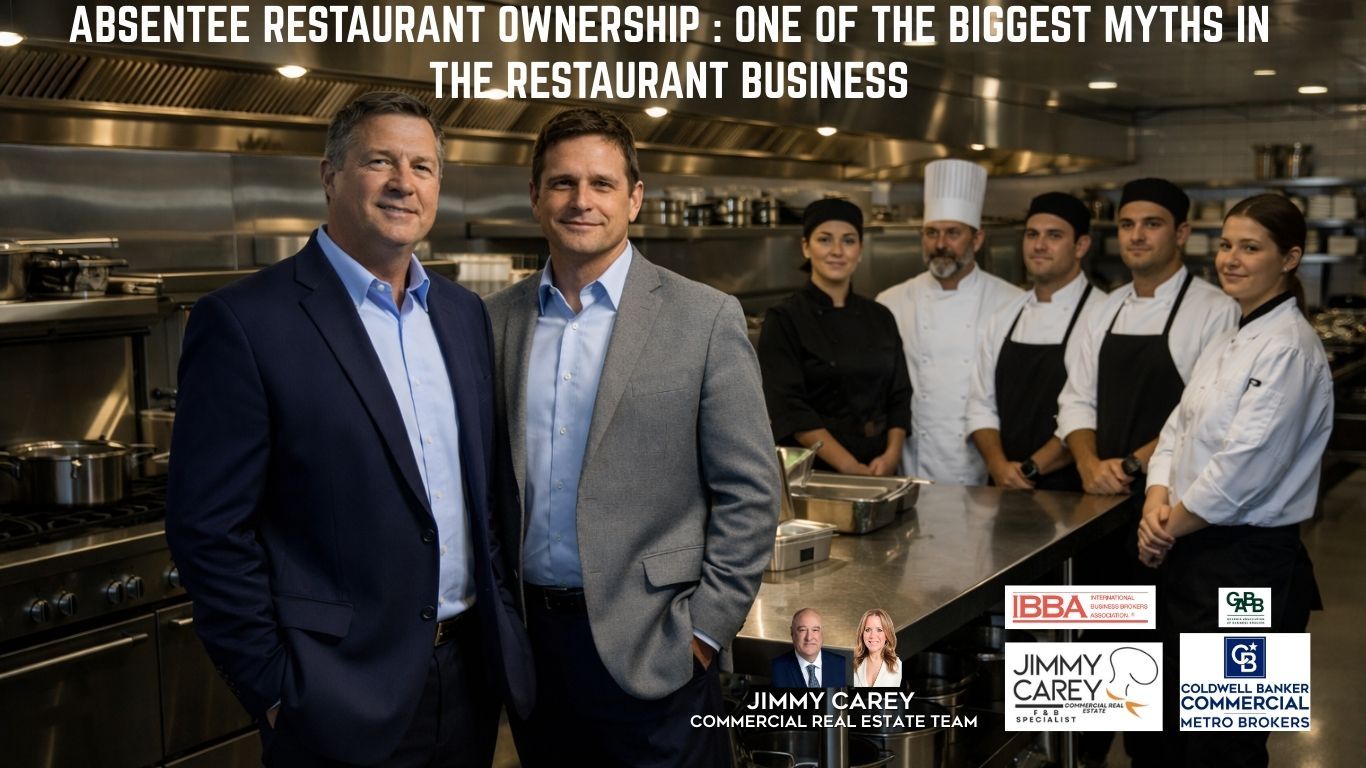
As a restaurant broker who has spent decades in this industry — as an owner, operator, and advisor — I can tell you this with absolute clarity:
Absentee restaurant ownership is one of the most misunderstood and misrepresented ideas in the restaurant business.
I receive calls every week from so-called “investors” looking to buy a restaurant that:
- Produces a specific amount of income
- Requires minimal involvement
- Can be run by “the employees already in place”
- Allows the owner to operate remotely
Every single time, I know how this conversation ends. Because I've had it hundreds of times over my 37+ years in the restaurant business—first as a chef, then as an owner of five restaurant locations, and now as Atlanta's Premier Restaurant Broker.
These callers aren't restaurant buyers. They're dreamers chasing an absentee owner restaurant investment fantasy that doesn't exist in the real world of food and beverage operations. And if I don't tell them the truth now, they'll learn it the expensive way—after they've burned through their capital, destroyed a viable business, and damaged their financial future.
This blog is the reality check most "restaurant investors" never get until it's too late. If you're searching for "absentee owner restaurant investment Atlanta" or "passive income restaurant opportunities," you need to read every word of this before you waste another minute—or another dollar.
What People Mean When They Say “Absentee Restaurant Ownership Atlanta GA”
The Absentee Owner Restaurant Investment Delusion: Where It Comes From
When most buyers use the phrase absentee restaurant ownership, what they really mean is:
“I want to own the restaurant, but I don’t want to be involved in day-to-day operations.”
They envision:
- Employees handling service and kitchen operations
- A manager “running the show”
- The owner doing payroll and light administrative work
- Remote oversight from another city or state
This mindset often comes from outside the restaurant industry — real estate investors, tech professionals, or passive-income seekers — not from experienced operators.
The problem is that restaurants do not function like passive assets.
1. Franchise Marketing Creates False Expectations
Large franchise systems market "semi-absentee ownership" as part of their value proposition. They're selling systems, processes, and brand recognition that theoretically reduce the owner's operational burden.
Here's what they don't tell you in the glossy brochures: even successful multi-unit franchisees with professional management infrastructure still maintain daily operational oversight. They may not be flipping burgers, but they're monitoring labor costs, reviewing daily sales reports, handling HR issues, and making strategic decisions that directly impact profitability.
The franchise model works when you have:
- Multiple locations generating economies of scale
- Professional management teams with skin in the game (equity, profit-sharing, or performance-based comp)
- Systemized operations with clear KPIs and accountability structures
- An owner who understands restaurant operations deeply enough to knowwhen numbers look wrong
None of this describes the typical "investor" calling me about a single-location pizzeria in North Georgia.
2. Real Estate Investor Crossover Thinking
I work with successful real estate investors all the time. Many have built impressive portfolios of rental properties. They understand cap rates, cash-on-cash returns, and passive income structures.
Then they see a restaurant for sale and think: "This is just like rental property. I'll hire a manager, collect my checks, and let the business run itself."
Here's the fundamental difference: Rental properties are mostly passive after acquisition because tenants are self-interested in maintaining their living space, paying rent is legally enforceable, and maintenance issues are predictable and schedulable.
Restaurants are active operations where:
- Employees have zero ownership stake and will steal or slack off without oversight
- Customer satisfaction depends on dozens of micro-decisions every single shift
- Food costs fluctuate and require constant vendor management
- Health code compliance demands daily attention
- Labor scheduling affects profitability in real-time
Bottom line: The real estate investor mental model doesn't transfer to restaurant operations. Period.
3. Online Courses and Guru Culture
There's a cottage industry of "buy a business" courses that oversimplify restaurant ownership. YouTube videos with titles like "How I Bought 3 Restaurants with No Money Down" or "Passive Income from Food Service Businesses."
These gurus cherry-pick success stories, ignore survivor bias, and sell systems that work in very specific circumstances (if they work at all) as universal strategies.
What they never mention: the time investment required, the operational expertise needed, and the failure rate for absentee owners. Because that doesn't sell courses.
4. SBA Loan Availability
Ironically, easier access to capital brings more unqualified buyers into the market. When someone realizes they can get an SBA 7(a) loan with reasonable terms to buy a restaurant, they start believing the opportunity itself validates the strategy.
What they miss: SBA lenders approve financing based on business cash flow and collateral—not on whether the buyer's operational plan is realistic. The loan closing doesn't mean the business model works. It just means you qualified for debt.
As I discussed in my guide on what restaurant buyers actually look for in Atlanta deals, successful buyers demonstrate operational competence before they ever talk financing. Lenders can't evaluate whether your "remote management" plan is viable—but they'll foreclose when it fails.
Restaurants Are Operating Businesses, Not Passive Investments
Restaurants are one of the most operationally intensive small businesses in existence.
They involve:
- Perishable inventory
- Daily labor management
- Constant customer interaction
- Health department compliance
- Narrow margins
- Real-time decision-making
Unlike real estate or financial instruments, a restaurant’s success depends on execution every single day.
There is no “set it and forget it” model in food service.
Employees Are Not Assets — and They Are Never Guaranteed
I've lived this reality from both sides—as an owner selling restaurants and as a broker representing buyers and sellers through transitions. Here's what actually happens when ownership changes:
1. Employees Had Loyalty to the Previous Owner, Not the Business
That sous chef who's been there for five years? He stayed because the previous owner treated him well, gave him flexibility, and earned his respect. You're a stranger with a spreadsheet.
2. Good Employees Get Poached Immediately
Word travels fast in restaurant communities. When ownership changes—especially to an inexperienced absentee owner—good employees get recruited away by competitors who see an opportunity.
3. Employees Test New Ownership
Within the first two weeks, employees will test boundaries. If you're not present to establish expectations, enforce standards, and address issues immediately, you've lost control of the culture. And once you lose culture, you lose quality, service, and profitability.
4. Employees Know When You Don't Know What You're Doing
Restaurant staff can smell inexperience. If you can't read a prep list, don't understand labor scheduling, or can't tell when food costs are inflated, employees will take advantage. Not because they're bad people—because that's human nature when there's no accountability.
I covered the full complexity of employee transitions in my comprehensive guide on what happens to employees when you buy a restaurant in Atlanta. The short version: even with the best transition planning, employee retention is never guaranteed—and without operational presence, it's nearly impossible.
Buying a restaurant does not mean buying a team. It means buying the responsibility of leadership.
Why Landlords Strongly Oppose Absentee Restaurant Ownership Atlanta GA
Even if I'm wrong about everything else (I'm not), your absentee owner restaurant investment fantasy will die when you try to get landlord approval for the lease assignment.
Here's what most investors don't understand until they're deep into a transaction: landlords have approval rights over who takes over the lease. And landlords are not stupid.
What Landlords See When You Present as an Absentee Investor
From a landlord's perspective, approving an absentee owner with no restaurant experience is approving a future default. Here's their risk calculation:
Default Probability: Extremely High
- No operational experience = mistakes in labor management, food costs, marketing
- Absentee ownership = theft, quality decline, customer loss
- Out-of-state residence = can't respond to emergencies, violations, or operational issues
Exposure if Default Occurs:
- Property sits dark for 6-12 months minimum
- Specialized restaurant infrastructure (hoods, grease traps, walk-ins) limits re-leasing options
- Tenant improvement costs to re-tenant may be $100K-$300K
- Lost rent during vacancy period
- Legal costs to pursue default and re-let
Personal Guarantee Worthlessness:
- If your primary residence and assets are in another state and the restaurant is in North Georgia, collecting on a personal guarantee is expensive and potentially unenforceable
What Landlords Want to See
Successful lease assignments happen when buyers demonstrate:
Restaurant Operating Experience
- P&L fluency
- Staff management experience
- Health code and compliance knowledge
- Vendor relationship management
Hands-On Involvement Plan
- Daily or near-daily presence during transition
- Clear operational management structure
- Local residence or commitment to relocate
Strong Financials
- Sufficient liquidity to weather slow periods
- Net worth supporting personal guarantee obligations
- Realistic pro forma showing understanding of thin restaurant margins
Track Record
- Previous restaurant ownership or management
- References from other landlords or lenders
- Demonstrated ability to operate under similar conditions
The lease assignment process is so critical to transaction success that I wrote an entire breakdown on why landlord consent determines more Atlanta restaurant sales than price.
Spoiler Alert: If the landlord won't approve you, the deal is dead regardless of how much money you have.
Understanding Personal Guarantee Exposure
A personal guarantee makes you personally liable for all lease obligations—rent, CAM charges, legal fees, restoration costs—even after you might sell or abandon the business.
Typical exposure for Atlanta restaurant spaces:
- $6,000-$10,000 monthly base rent
- $1,500-$3,000 monthly CAM charges
- 5-10 years remaining on lease term
- Total guarantee exposure: $450,000-$1,560,000
When your absentee owner restaurant investment fails (and it will), here's what happens:
- Restaurant stops generating profit (poor management, theft, declining quality)
- You stop paying rent (cash flow dries up)
- Landlord demands payment under personal guarantee
- You're personally liable for all past-due rent plus future rent through lease expiration
- Landlord obtains judgment against you personally
- Collection actions include wage garnishment, bank levies, property liens
As I explained in my detailed guide on understanding personal guarantees in Atlanta restaurant leases, this isn't theoretical risk—it's a mathematical certainty for absentee owners without operational expertise.
The Only Situations Where Absentee Restaurant Ownership Can Work
To be precise, there are limited scenarios where absentee restaurant ownership can function — but they are not what most first-time buyers imagine.
Scenario 1: Multi-Unit or Corporate Infrastructure
- Layered management
- SOPs and reporting systems
- Redundant leadership
- Professional accounting and controls
Even here, the owner is not passive — they are strategic and accountable.
Scenario 2: Experienced Operator With a Proven GM
- Deep training
- Clear authority structure
- Active oversight
- Regular involvement
In both cases, the owner is still responsible — just at a different level. This is not hands-off ownership. It’s professional ownership.
Real-World Examples: Absentee Owner Restaurant Investment Failures I've Witnessed
The Oregon Investor and the North Georgia Pizzeria
A few months ago, I got a call from an investor in Oregon. He wanted to buy a pizzeria in North Georgia. Had money. Zero restaurant experience. Planned to "manage remotely" with existing employees.
I explained the landlord approval issue. He insisted his strong financials would overcome experience concerns. We never even got to the LOI stage because I knew the landlord would never approve—and I was right.
Why this failed:
- 2,500+ miles from property
- No restaurant experience
- Relied entirely on inherited staff who owed him nothing
- Landlord saw disaster from day one
The Multi-State Franchise Dream
An investor with successful real estate holdings wanted to buy several franchise locations across Georgia. His plan: hire managers, implement systems, visit quarterly.
Even with franchise brand support, landlords pushed back. They wanted proof of restaurant management infrastructure, not just capital.
Why this stalled:
- Franchise support doesn't replace daily operational presence
- Building management infrastructure requires time and expertise
- Landlords saw cost-cutting incentives conflicting with quality maintenance
- Banks questioned cash flow assumptions for absentee model
What Successful Restaurant Investment Actually Looks Like
I'm not saying restaurant investment is impossible. I'm saying absentee owner restaurant investment without operational expertise or infrastructure is fantasy.
Scenario 1: Owner-Operator Investment
This is the most common and successful approach:
You:
- Work in the business daily (at least during year one)
- Learn operations deeply
- Build systems and train staff
- Establish vendor relationships
- Develop financial controls
Over time, you can reduce presence by:
- Hiring strong management with skin in the game
- Implementing technology controls (POS, cameras, inventory systems)
- Creating checklists and SOPs
- Building accountability structures
This works because: You know operations well enough to spot problems in financials or reports even when you're not present daily.
Scenario 2: Multi-Unit Operator with Infrastructure
If you're buying your fifth location and already have:
- Professional management team
- Proven systems and controls
- Track record of successful operations
- Adequate capital to support infrastructure
Then yes—adding a sixth location can approach "semi-absentee" status. But you're not starting from scratch. You're scaling existing expertise.
Scenario 3: Active Partnership with Experienced Operator
Some successful restaurant investments involve partnerships where:
- One partner provides capital
- Other partner provides operational expertise and daily management
- Profit-sharing reflects contributions
- Both parties are aligned and involved (just in different capacities)
This works when: The operating partner has significant stake and autonomy, the capital partner understands their role is hands-off but informed, and both parties have clear expectations.
Questions I Ask "Investors" to Reality-Check Their Plans
When someone calls about absentee owner restaurant investment, here are the questions I ask:
- "Have you ever managed restaurant operations?"
- "Who will make the 6am produce order decision when the vendor calls with price changes?"
- "What's your plan when the manager you hire quits in month three?"
- "How will you know if employees are stealing?"
- "What's your experience with P&L analysis for restaurants?"
If you can't answer these questions confidently, you're not ready to buy a restaurant—especially as an absentee owner.
Summary: The Right Way to Invest in Restaurants
Four Viable Options (Instead of Absentee Ownership):
Option 1: Get Experience First Work as a restaurant manager for 1-2 years, learn operations from inside, then invest with real knowledge.
Option 2: Partner with an Operator Provide capital to an experienced operator who runs the business. They get equity and control operations; you provide funding and strategic input. This is a great option and a very viable one.
Option 3: Be a Limited Partner Invest in established multi-unit restaurant groups that already have infrastructure and track record. True passive income through professional operators.
Option 4: Buy and Commit Fully Purchase a restaurant but plan to work full-time for 12-18 months learning every position before ever considering stepping back.
Why Jimmy Tells the Hard Truth:
Even though it costs him deals, Jimmy refuses to facilitate bad transactions because:
- He's lived the restaurant business for 37+ years and knows what fails
- Failed deals hurt everyone: buyers, employees, vendors, landlords
- His reputation matters more than quick commissions
- He actually wants investors to succeed—which means doing it right
Bottom line: If you want passive income, restaurants aren't the answer. If you want to build a real restaurant business, these four paths actually work.
Frequently Asked Questions About Absentee Owner Restaurant Investment
Q: Can I really not invest in a restaurant without working in it?
A: You can—but you need either: (1) deep restaurant operational expertise so you can spot problems remotely, (2) professional management infrastructure with significant skin in the game, or (3) willingness to accept that your "investment" is really funding your education in why this doesn't work.
Q: What about franchise systems that promote semi-absentee ownership?
A: Franchises with strong systems can reduce operational burden, but successful multi-unit franchisees still maintain daily oversight. The marketing language "semi-absentee" doesn't mean "absent." It means you're not flipping burgers, but you're still deeply involved in management, financial controls, and strategic decisions.
Q: Isn't this just risk-averse thinking? Don't entrepreneurs take risks?
A: Calculated risk with expertise is entrepreneurship. Ignoring operational realities because you want passive income is gambling. I've been an entrepreneur for 37+ years. I understand risk. I also understand the difference between smart risk and delusional risk.
Q: What if I hire a really good manager?
A: Defining "really good" requires operational expertise you don't have. Even if you miraculously hire well, good managers want equity or premium comp. Can your margins support that? And what happens when they leave? Without deep operational knowledge, you can't evaluate, manage, or replace them effectively.
Q: Why do landlords care if I'm absentee? I have money and good credit.
A: Because landlords know that without operational presence, your restaurant will fail—which means they face vacancy, re-tenanting costs, and lost rent. Your money doesn't eliminate their risk. Actually, it increases it because they know you'll abandon faster when reality hits. The full explanation is in my guide on why landlord consent decides more restaurant sales than price.
Q: Can't I just visit weekly and review reports?
A: No. Weekly visits won't catch daily theft, declining quality, or operational shortcuts. And reports only tell you what you understand how to read—which requires operational expertise. By the time problems show up in financials, they've already destroyed your margins.
Q: Why do brokers discourage absentee buyers?
A: Because they statistically fail more often, waste time, and reduce closing probability.
The Bottom Line on Absentee Owner Restaurant Investment
If you've read this far hoping I'd eventually say "here's how to make absentee owner restaurant investment work," I'm sorry to disappoint you.
It doesn't work. Not in the real world of restaurant operations. Not in Atlanta. Not anywhere.
The math doesn't work. The margins are too thin. The operational demands are too constant. The employee dynamics don't support it. The landlords won't approve it. The theft and waste will kill you.
You can either accept this reality now—before you've spent your capital, signed personal guarantees, and committed to years of financial liability—or you can learn it the expensive way.
"Want to invest in restaurants? Partner with an experienced operator. You bring capital, they bring expertise and run operations. Unlike absentee ownership fantasies, this actually works." - Jimmy Carey
If you're ready to invest in restaurants the right way—with operational presence, realistic expectations, and proper guidance—I'm here to help. I know the Atlanta market, I understand restaurant operations deeply, and I can help you find opportunities that actually match your capabilities and commitment level.
But I won't help you chase a fantasy. Because I care more about your success than my commission.
About Atlanta's Premier Restaurant Broker
Jimmy Carey brings over 37 years of restaurant industry experience as a chef, multi-unit restaurant owner, and now Atlanta's Premier Restaurant Broker with Coldwell Banker Commercial Metro Brokers. Having owned and operated five successful restaurants including Jimmy'z Kitchen in Miami and Atlanta, Jimmy understands both sides of restaurant transactions from lived operational experience—not theory.
As a member of the International Business Brokers Association (IBBA) and the Georgia Association of Business Brokers (GABB), Jimmy maintains the highest professional standards in restaurant business brokerage while providing the honest guidance that comes from decades in the trenches.
For sellers who want to understand when the right time to exit actually is, read the best time to sell a restaurant in Atlanta.
Connect with Jimmy on Instagram, Facebook, LinkedIn, and YouTube for market insights, new listings, and real talk about restaurant ownership and transactions.
Jimmy Carey Commercial Real Estate
Atlanta's Premier Restaurant Broker
Coldwell Banker Commercial Metro Brokers
📞 305-788-8207 | 678-320-4800